
The right window tint comes down to proven performance, not just how dark it looks. Carbon film can suit certain budgets and preferences, while quality ceramic film often provides stronger heat control for drivers around Cleveland and the Redlands.
Choosing car window tint sounds simple until you start comparing film types and performance figures. Suddenly, it feels like you need a science degree just to make the cabin feel cooler.
Which tint will handle Queensland heat and suit your budget? Find out below.
Carbon Tint vs Ceramic: What’s the Big Difference?
Carbon film contains carbon particles incorporated into a polyester film.
Ceramic film uses microscopic ceramic particles designed to reduce solar heat. Many ceramic films are non-metallised, but the exact construction depends on the product.
When comparing ceramic vs carbon tint, the manufacturer, film series, shade, adhesive, and quality of installation all affect the result.
The Figures Worth Understanding
Tint specifications can become alphabet soup real quick. These are the useful ones:
VLT: Visible light transmission is the percentage of visible light that passes through the glass and film. A lower number means a darker result.
TSER: Total solar energy rejected measures how much overall solar energy the film rejects.
UV rejection: This shows how much ultraviolet radiation the product blocks.
Infrared rejection: This relates to infrared energy. Only compare figures when brands use similar testing methods and wavelength ranges.
Who Might Choose Carbon Tint?
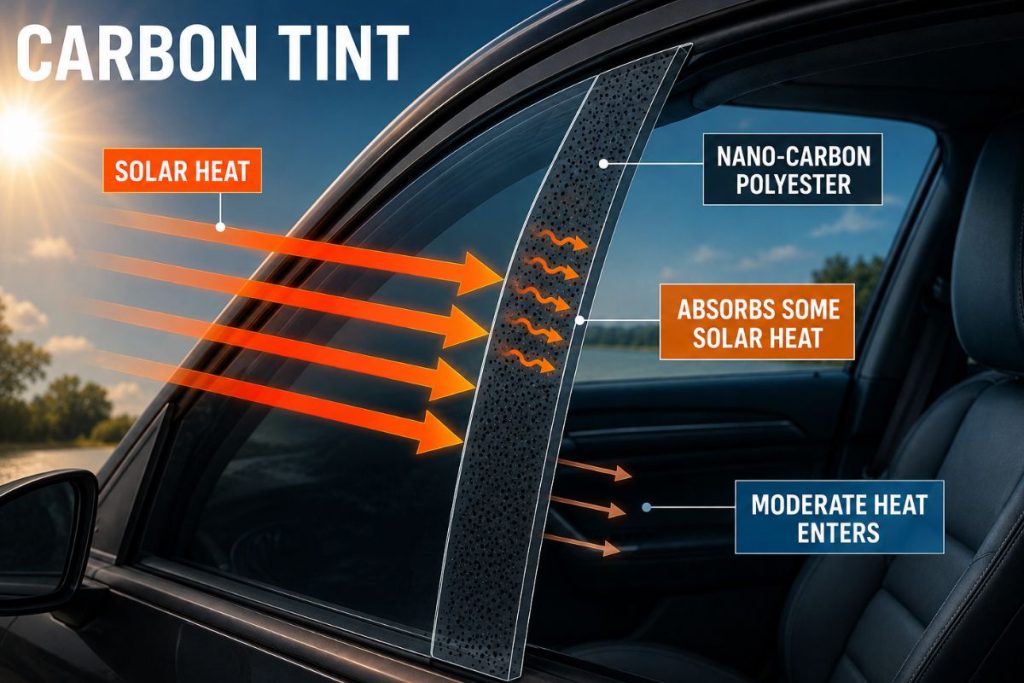
Carbon tint uses carbon particles to absorb some solar energy and create a dark, non-reflective finish. Quality carbon films are generally designed to resist fading, and non-metallised versions won’t interfere with mobile, GPS, or radio signals. Heat rejection varies between products and is usually lower than the better-performing ceramic ranges.
Carbon tint may suit:
- Drivers who want a dark charcoal or matte appearance
- Buyers looking for a less expensive alternative to premium ceramic film
- Vehicles that aren’t regularly parked or driven in strong daytime heat
- Owners who’ve compared the film’s VLT, TSER, UV, and infrared figures with their actual needs
Who Might Choose Ceramic Tint?

When comparing ceramic tint vs carbon tint, ceramic is usually the higher-performing option for heat control. Its microscopic ceramic particles can reject substantial infrared energy without relying on the darkest available shade. Non-metallised ceramic films can also maintain clear outward visibility without disrupting mobile, GPS, or radio signals.
Ceramic tint may suit:
- Daily drivers used during the hottest parts of the day
- Cars regularly parked outside in Queensland sun
- Drivers who want strong heat rejection without choosing an extremely dark shade
- Vehicles regularly carrying passengers on daytime trips
- Owners willing to pay more for verified solar performance and a suitable warranty
Redlands Auto Protection offers nano-ceramic automotive film through our Window Tinting service.
How Do the Two Films Compare?
A darker shade doesn’t automatically provide greater heat rejection or better UV protection. While automotive window film can reduce heat, glare, and UV radiation, its actual performance depends on the specific product and tested specifications.
For drivers around Cleveland and the Redlands who regularly deal with strong sun and daytime heat, a quality ceramic film will often be the more suitable choice.
Ceramic vs Carbon Tint Price Comparison
The final cost can change with:
- The vehicle’s size and number of windows
- The selected film series and shade
- Removal of old or damaged tint
- Curved or awkward glass
- Installation complexity
- Warranty terms
Compare the complete installed price, tested specifications, and written warranty.
How to Choose Without Overthinking It
Before booking, think about whether the car lives outside, when you normally drive, and whether it already has factory privacy glass.
When choosing between ceramic vs carbon tint, ask the installer:
- What exact film and shade will be fitted?
- What are its VLT, TSER, UV, and infrared figures?
- Were the infrared figures measured across the same wavelength range used in the product comparison?
- Will existing tint need to be removed?
- What does the written warranty cover?
- What curing time and aftercare are required?
Keep It Legal in Queensland
Carbon and ceramic films face the same glazing requirements. The technology doesn’t change the legal darkness.
The final VLT includes the original glass and any film applied over it. Queensland guidance generally requires at least 35% VLT on front side windows. For many passenger vehicles, windows behind the driver may have a minimum 20% VLT when an external rear-view mirror is fitted to each side. The exact rules can depend on the vehicle, so check before anything goes on the glass.
Film across the main swept area of the windscreen is generally not permitted, although a compliant strip may be allowed along the top. Reflective, damaged, bubbled, or distorted film can also be non-compliant.
Have the existing glass measured before choosing a shade, as a film labelled 35% won’t necessarily produce that result over factory-tinted glass. The current Queensland Government guidance for tinting light vehicles sets out the applicable requirements and exemptions.
Talk to Redlands Auto Protection
We’re Redlands Auto Protection, a Cleveland-based vehicle-protection specialist serving drivers across the wider Redlands. Our advertised nano-ceramic window films are designed to reject infrared heat, block more than 99% of UV radiation, reduce glare, and maintain clear outward visibility. Their non-metallised construction also avoids interference with mobile, GPS, radio, and Bluetooth signals.
We’ll check your vehicle and recommend an available film series and legal tint level for its front, rear, and windscreen glazing. Whether it’s a daily driver or something a bit special, you’ll get a clear explanation of the options, professional installation, and a free vehicle-specific quote. Contact us today to get started.
